
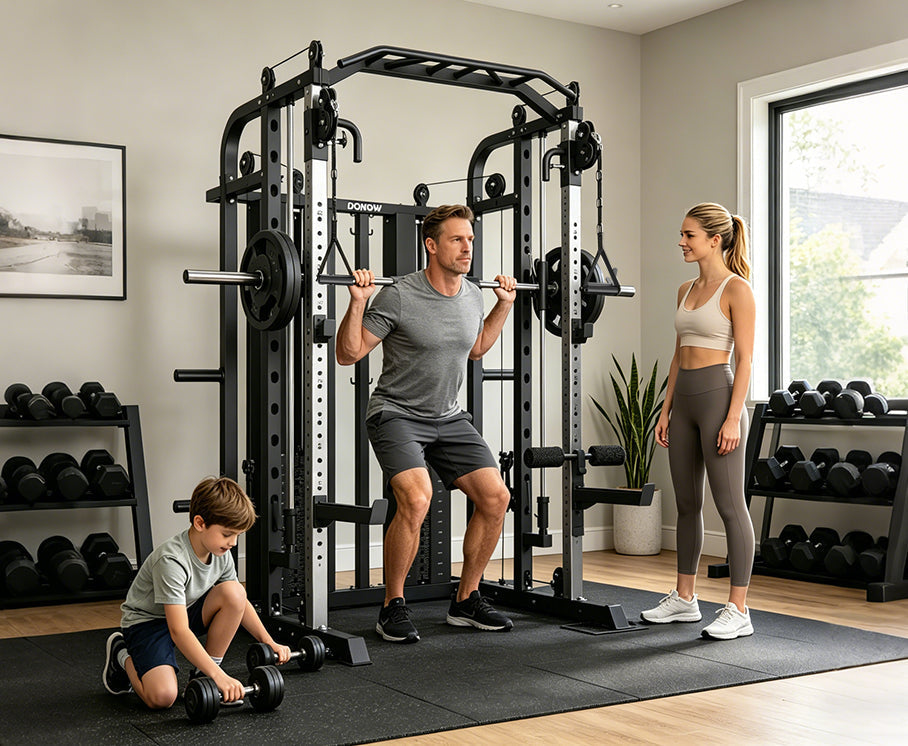
In today’s fast-paced world, more fitness enthusiasts are building home gyms to avoid crowded commercial spaces, save time, and train on their own schedule. For beginners, a Smith machine is often the ideal centerpiece—it offers guided, safe movements while still allowing for effective full-body workouts. But with so many options available, how do you choose the right one for your home? This comprehensive guide breaks down everything you need to know to make an informed decision.
What Is a Smith Machine & Why Is It Great for Beginners?
A Smith machine is a weight training equipment featuring a barbell fixed within steel rails, allowing only vertical movement. It’s perfect for beginners because:
- Built-in safety: The fixed bar path reduces balance challenges and injury risk
- Guided form: Helps learn proper technique for compound lifts like squats and bench presses
- Solo training confidence: Locking mechanisms let you train safely without a spotter
- Progressive overload: Easy to add weight as you get stronger
While power racks offer more movement freedom, Smith machines provide the structure and safety new lifters need to build foundational strength.
7 Critical Factors to Consider When Buying a Home Smith Machine
1. Frame Quality & Stability (Non-Negotiable!)
The foundation of any good Smith machine is its frame. For home use, prioritize:
|
Feature |
Beginner Recommendation |
Why It Matters |
|
Steel Gauge |
11–14 gauge (thicker = better) |
Prevents flexing during heavy lifts; 11-gauge is commercial-grade |
|
Upright Profile |
2×2 or 2×3 inch |
Wider profiles offer more stability and attachment points |
|
Machine Weight |
200+ lbs (unloaded) |
Heavier machines resist wobble during squats and lunges |
|
Base Design |
Wide, reinforced footprint |
Dual-triangle bases minimize sway and tipping risk |
Pro Tip: Avoid lightweight "budget" models under 150 lbs—they’ll feel unstable as you progress.
2. Weight Capacity & Bar Details
- Minimum Weight Capacity: Aim for 600–800 lbs for long-term use
- Beginners may only use 300–400 lbs initially, but you’ll outgrow lower-capacity machines quickly
- Serious lifters should consider 1,000+ lbs capacity for longevity
- Smith Bar:
- Weight: Typically 15–45 lbs (check specs—this affects your total working weight)
- Bearings vs. Bushings: Linear bearings provide smoother glide than bushings; avoid models with just guide rods
- Locking Mechanism: Look for easy-to-reach safety hooks with 1–2 inch spacing for precise adjustments
3. Space Requirements (Measure Twice!)
Smith machines need dedicated space—don’t skip measurements:
- Floor Space: Minimum 7×8 ft for standard models; compact versions may fit 6×7 ft
- Ceiling Height: 8–9 ft minimum (taller users need 9+ ft)
- Clearance: Leave 2–3 ft around the machine for safe movement
Space-Saving Options:
- Foldable models (ideal for apartments)
- Combination units (Smith + power rack + cable system) for multi-functional use without extra footprint
4. Safety Features (Your #1 Priority)
For beginners, safety features are non-negotiable:
- Adjustable Safety Catches/J-Hooks: Must be easy to adjust and lock securely
- Weight Plate Storage: Integrated posts prevent clutter and accidents
- Bar Lockouts: Multiple locking positions for bailing out of failed lifts
5. Versatility & Attachments
Maximize your investment with these features:
- Integrated Pull-Up Bar: Essential for upper-body training variety
- Cable Crossovers: Enable functional training and accessory work (rows, flyes, etc.)
- Weight Stack Option: Convenient for quick weight changes (vs. loading plates)
- Bench Compatibility: Ensure it works with standard Olympic benches for chest press and other exercises
- Accessory Package: Look for included barbell, weight plates, and complete training accestories for immediate training
6. Ease of Assembly & Maintenance
- Assembly: Clear instructions, numbered parts, and video tutorials are essential for beginners
- Avoid models requiring professional assembly (adds cost)
- Check user reviews for real assembly time estimates
- Maintenance:
- Powder-coated finish resists rust and scratches
- Sealed bearings reduce lubrication needs
- Replaceable parts (cables, pulleys) extend machine lifespan
7. Budget Considerations (Value Over Price)
Smith machines range from $500–$3,000+ for home models. Here’s how to allocate your budget:
|
Budget Range |
Best For |
Key Features to Expect |
|
$500–$1,000 |
Entry-level beginners |
Basic frame, 600 lbs capacity, minimal attachments |
|
$1,000–$2,000 |
Serious beginners/intermediate |
800+ lbs capacity, linear bearings, integrated pull-up bar, cable system |
|
$2,000+ |
Advanced lifters/families |
1,000+ lbs capacity, commercial-grade steel, full accessory package |
Long-Term Savings: A quality Smith machine pays for itself in 1–2 years vs. gym memberships ($50–$150/month).
Who Should (and Shouldn’t) Buy a Smith Machine?
Perfect For:
- Busy professionals who want to train anytime without commuting
- Fitness beginners who need guided form and safety features
- Solo trainers who don’t have a spotter for heavy lifts
- Families with multiple users of varying fitness levels
- Space-conscious home gym owners who want multi-functional equipment
Consider Alternatives If:
- You prioritize free-weight movement and stabilizer muscle activation (choose a power rack)
- You have very limited space (consider adjustable dumbbells or resistance bands)
- You only do bodyweight exercises (save your money)
Common Mistakes Beginners Make When Buying
- Sacrificing quality for price: Cheap machines wobble, have rough bar movement, and fail quickly
- Ignoring space requirements: Measure before buying—returning large equipment is costly
- Overlooking weight capacity: Buy for where you’ll be in 1–2 years, not just today
- Forgetting accessories: Factor in the cost of weights, bench, and attachments if not included
- Neglecting warranty: Look for 5–10 year frame warranties and 1–2 year parts coverage
Final Recommendation: Your First Home Smith Machine Checklist
Before purchasing, verify these must-have features:
✅ 11–14 gauge steel frame with 2×2/2×3 inch uprights
✅ 600+ lbs weight capacity (800+ lbs preferred)
✅ Linear bearings for smooth bar movement
✅ Multiple safety lock positions (1–2 inch spacing)
✅ Integrated pull-up bar and weight storage
✅ Fits your available space (measure ceiling height too!)
✅ Within budget with room for accessories
✅ 2+ year frame warranty
Ready to Build Your Home Gym?
A Smith machine is more than just equipment—it’s your ticket to consistent, safe, and effective workouts at home. By focusing on frame quality, safety features, and long-term value, you’ll find a machine that grows with your fitness journey.
Remember: The best Smith machine for beginners is the one that matches your space, budget, and goals while keeping you safe as you learn and progress. Start small, dream big, and enjoy the convenience of training on your own terms!
Share:
Sincmill SCM-1148L: The Best Choice of All-in-One Multifunctional Home Gym Station